
Vinod Mehta, Editor-in-Chief, Outlook Grp
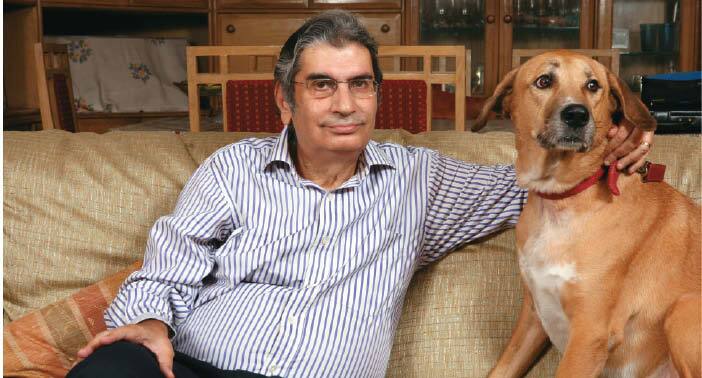
Q: Why did you choose Editor - an unusual name - for your pet dog?
A: He has a very strange temperament. He is very stubborn and like most editors, he thinks he knows every thing.
Q: Barring the exceptions, education in India is in shambles. Do you agree?
A: One of the biggest scandals, forget the quality of education, is the organized sort of racket in the schools for admissions. The middle class is very innovative and they can find ways to get round the system. But the real tragedy is in the primary education in rural areas where the situation is appalling. As our politicians concentrate on secondary education and the middle class, very little attention is paid to primary education. Government spends a lot of money. It should also ensure that it reaches the right people.
Q: What is the one big difference between yesterday’s and today’s youth?
A: In my time, if your father was well-placed he will put you in a good job with his connections. Happily, that is much less now.
Q: You became a journalist out of sheer passion or just by accident?
A: Like many people, I did not have any idea of what I wanted to become. I did BA and then in 1974 I got a chance by accident, to edit Debonair in Mumbai. The only thing I was interested in was writing and I didn’t know what kind of writing. I tried my hand at copywriting but I wasn’t very good.
But I liked to write. Debonair was 7-8 months old when I joined and it was running at a loss. The owner wanted to close it down. So I asked him to give me a chance to run it for six months and if it didn’t improve, he could close it. I stayed there for seven years, till ‘81 and by the time I left, it was making some money.
Q: What was the naughtiest thing you did in school?
A: When I was at Loreto convent (the school was co-ed till third standard), there was a girl sitting opposite me and wanted to borrow my eraser. I agreed and asked her to be my girlfriend. She complained, my parents were called, and I was expelled from the school for six months.
Q: How do you react to the state of higher education?
A: In higher education, people are paying huge price and going abroad, but one can get good education in our own country. But there aren’t enough places and where they are, there is talk of reservation. If government plans the quota then it should increase the number of seats. Quotas are here to stay so the government should create new institutions.
Q: Should foreign institutions be allowed entry?
A: They want to come here not because they love us but because there is money to make. I am not a great believer that anybody who wants to come in should be allowed to come in because the education sector is very rich. I am not saying we should be opposed to the idea but their entry should be strictly regulated.
Q: There is also the menace of adverts of educational institutions in the media misleading students.
A: The general rule should be that any institution which advertises heavily should be thoroughly examined by the students. They should be skeptical about their claims and verify the facts. A lot has been bared in the public domain on some corrupt institutions which should serve as a warning. Avoid such institutes even if students have to travel out of their native place.
Q: How trustworthy are the B-school rankings? Outlook has done one in its latest issue.
A: A lot of people believe that the rankings are fudged. In Outlook, I have no idea till the time I get the results and it is true for more responsible media. Students should check who has done the survey and what has been the methodology. They should also check, if the publication has any vested interest in any of the institutions. In B-school survey, every year there are four-five good institutes which find place in the rankings and no one can say that it is fixed.
Q: So a student should not trust any ranking of any publication blindly?
A: Absolutely. They can use the survey as a good yardstick but they should use their own brains. Rankings give the perspective of the whole scene. It gives options, if you can’t get into one, then you can opt for number two and so on.
Q: Multiple committees, regulatory bodies, different councils, isn’t there utter chaos in the education sector?
A: Right. But remember, you take land from the government; there are grants that are taken. But now the rules are being simplified. The good thing is education is an area where there is a lot of public interest and public pressure.
Q: Why is vocational studies not treated at par with higher education?
A: It is one of the biggest tragedies that this area is woefully neglected. Every one wants to get into higher education when ideally they should be getting into vocational training and learning some skill, some trade, suiting their interest and aptitude.
Q: What kind of student were you when you were in college, studious, polite or agitating type?
A: Not very good. Chalta type. I wasn’t academically inclined. Coming from a very middle class family, I ensured that I somehow managed to pass every year and not upset my parents. In BA, I got a third-class.
Q: And your political affiliation is?
A: In India, what are the possibilities? There are only two political parties, the BJP and the Congress, I can’t choose the Marxists because of their views. And because I am a liberal, I have problems with the BJP. If I don’t support the Congress where will I go? If the BJP gives up their anti-minority stand I would consider them very seriously.
