INI CET College Predictor 2025
Predict admission chances in AIIMS, JIPMER, PGIMER & NIMHANS Campuses


The Bachelor of Ayurvedic Medicine and Surgery (BAMS) is a five and a half year undergraduate medical course that includes a one-year internship. It combines traditional Ayurvedic methods with modern medical science, focusing on natural healing and prevention. Ayurveda is the main part of this course, promoting overall health and balance. In India, more than 560 colleges offer BAMS programmes, including about 480 private and 80 government institutes. Graduates can work as Ayurvedic doctors, consultants, or continue higher studies.
This Story also Contains
Key Features of the BAMS Course
The BAMS is a five-and-a-half-year undergraduate degree in Ayurvedic medicine. It teaches students traditional healing methods, herbal formulations, and modern medical practices. The course prepares graduates to diagnose, prevent, and treat diseases using Ayurvedic principles for holistic health and well-being.
BAMS stands for Bachelor of Ayurvedic Medicine and Surgery. It is a popular medical course after 12th Science (PCB) that combines traditional Ayurvedic knowledge with modern medical science. The BAMS course focuses on holistic healing, disease prevention, herbal treatments, and therapies based on ancient Indian medicine systems approved by AYUSH.
Bachelor of Ayurvedic Medicine and Surgery (BAMS) is a well-known undergraduate programme in the field of traditional Indian medicine. It usually spans five and a half years, including a mandatory one-year internship. Admission is commonly based on NEET scores. The table below covers key highlights of the BAMS course, such as duration, fees, career options, and average salary:
Particulars | Values |
|---|---|
Course Name | BAMS |
BAMS Full Form | Bachelor of Ayurvedic Medicine and Surgery |
BAMS Program Level | Undergraduate |
BAMS Program Type | Degree |
BAMS Course Field | Ayurveda Medical Science (Healthcare) |
BAMS Course Duration | 5.5 years with an one year internship |
BAMS Eligibility Criteria | 10+2 from a recognised board in India, with Physics, Chemistry, Biology and English as compulsory subjects. |
BAMS Average Salary | Rs. 4.4 LPA (Ayurvedic Doctor) |
BAMS Course Fees | Rs. 35,000 to Rs. 42 Lakhs (varies by the institute) |
BAMS Career Options | Ayurvedic Pharmacist, Ayurveda Consultant, Panchkarma Practitioner, Ayurveda Lecturer |
BAMS Top Recruiters | Cipla, Lupin, Zydus Cadila, Reddy’s Laboratories, Aurobindo Pharma, Sun Pharmaceutical Ltd, Glenmark Pharmaceuticals |
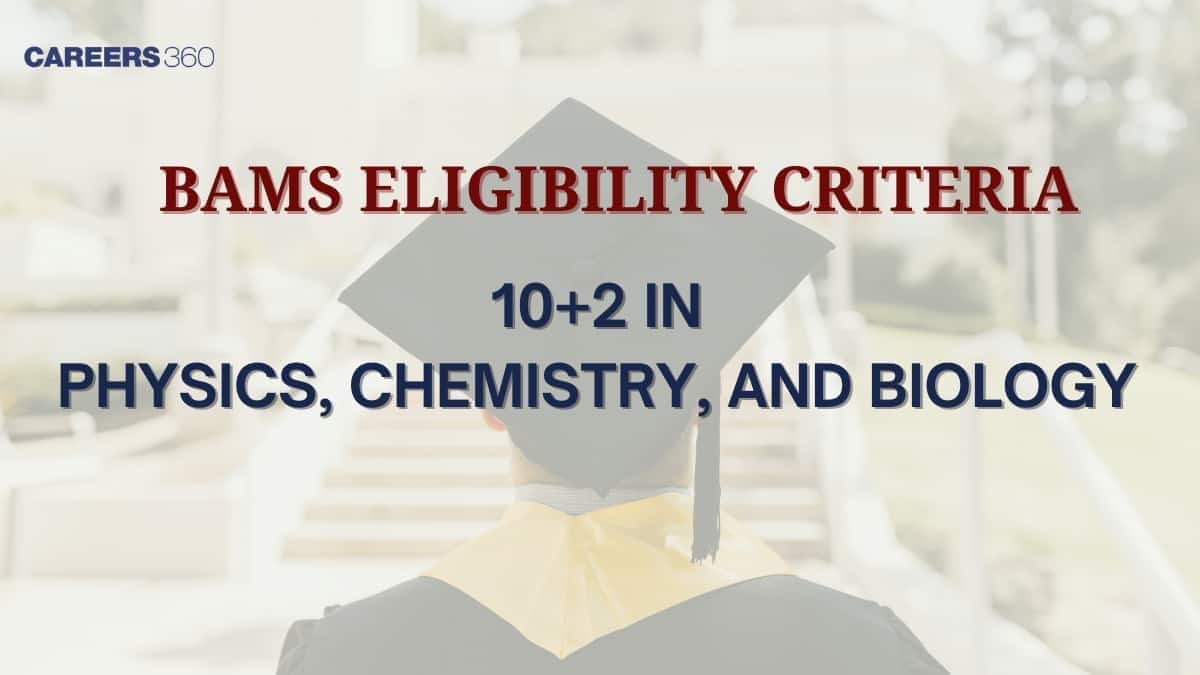
The eligibility criteria for BAMS (Bachelor of Ayurvedic Medicine and Surgery) differ depending on the provider. However, it remains more or less the same for all the institutes. In the table below, we have mentioned the general BAMS eligibility criteria.
Parameters | Educational Qualification |
|---|---|
Eligibility Criteria | 10+2 from a recognised board in India, with Physics, Chemistry, Biology and English as compulsory subjects. |
Minimum aggregate score | 50-60 per cent aggregate score, 5-10 per cent relaxation for candidates belonging to the reserved categories |
Entrance Examinations | NEET UG is a popular entrance examination for various medical courses. |
The admission process for the BAMS course is primarily based on the NEET UG exam, conducted by the National Testing Agency (NTA). Candidates must qualify for this exam to be eligible for admission to various BAMS colleges. Here are some general steps involved in the admission process after qualifying for NEET.
Step 1- Fill the NEET Application Form: Candidates need to complete and submit the NEET UG application form with accurate details.
Step 2- Appear for the NEET Exam: Candidates must appear for the NEET UG exam and obtain a qualifying score.
Step 3- Counselling and Seat Allotment: After clearing the exam, candidates will participate in the counselling process for seat allocation based on their scores.
Step 4- Document Verification: Selected candidates will need to submit the necessary documents for verification.
Step 5- Fee Payment and Admission Confirmation: Finally, candidates must pay the required fees to confirm their admission.
While the main criteria for admission to the BAMS degree are through NEET, many universities may admit without the scores of the same. Students can check the official website of the provider for further information regarding the course details. Generally, BAMS admission without NEET is done based on class 12th marks or direct admission.
Related- Allied health sciences have millions of jobs, but go unnoticed in the craze for MBBS
Admission to the BAMS course programme depends on the NEET entrance examination. Candidates who want to pursue the BAMS course programme must appear for the entrance exam. Ayush Admissions Central Counselling Committee (AACCC) is responsible for providing admission to the course.
| Exam Name | Conducting Body | Exam Date |
|---|---|---|
National Testing Agency |
After completing the BAMS course, students can pursue an MD in Ayurveda to specialise in a specific branch of Ayurvedic medicine. These specialisations help graduates gain deeper knowledge and clinical expertise in their chosen area. Below are some of the MD specialisations available in BAMS:
The BAMS (Bachelor of Ayurvedic Medicine and Surgery) degree is widely recognised in India and is gaining global attention. In India, it is regulated by the Central Council of Indian Medicine, allowing graduates to practise as licensed Ayurvedic doctors.
Globally, recognition of BAMS varies across countries. In places like the USA, Canada, Australia, and the UK, Ayurveda is popular, but additional certifications or local approvals are often required to practise. Even where clinical practice is limited, graduates can explore careers in research, wellness consultancy, teaching, and alternative healthcare services. (Source: Ask-Ayurveda)
BAMS graduates can improve their career prospects by pursuing professional certifications that complement their Ayurvedic knowledge. These courses help in gaining specialised skills, staying updated with wellness trends, and increasing employability in areas such as clinical practice, Panchakarma, herbal therapy, nutrition, and wellness management.
The BAMS cut-off determines candidates' eligibility based on their NEET performance. It varies from one college to another, depending on the number of applicants and the difficulty level of the NEET exam. Each institution sets its own cut-off criteria to admit students to the BAMS course.
The Bachelor of Ayurvedic Medicine and Surgery (BAMS) course is offered in both government and private colleges across India. Seat availability varies depending on the institution, infrastructure, and faculty strength. Growing interest in Ayurveda has led many colleges to expand their intake. Below is the seat intake of some top colleges.
| College Name | Seat Intake |
|---|---|
Banaras Hindu University (IMS) | 50 |
National Institute of Ayurveda | 125 |
Patanjali Ayurved College | 100 |
RK Ayurvedic Medical College | 60 |
Sriganganagar College of Ayurvedic Science | 60 |
NKJ Ayurvedic College | 60 |
Note: Seat capacities may change each year due to approvals and regulations.
The BAMS syllabus, designed by the National Commission for the Indian System of Medicine, is divided into four professional stages. It covers a range of subjects, including Ayurvedic fundamentals, anatomy, pharmacology, diagnostics, and specialised treatments. The detailed syllabus for each professional stage is provided below:
The first year of the BAMS course introduces fundamental Ayurvedic principles and foundational subjects like Padartha Vigyan and Rachana Sharir. This stage lays the groundwork for understanding Ayurveda’s history, philosophy, and basic anatomy, laying the stage for more advanced studies in later years.
In the second professional stage, the focus shifts to more specialised subjects, including Dravyaguna Vighyan and Rasashastra. This year improves students' understanding of Ayurvedic medicines, diagnostic methods, and their applications. These subjects provide essential knowledge for diagnosing diseases and understanding herbal treatments, which are required for clinical practice.
The third professional year delves into clinical practices with subjects such as Agadtantra and Prasuti Tantra Evum Stri Roga. It highlights practical treatments and preventive care in Ayurveda. Students learn to apply theoretical knowledge in real-world situations, preparing them for patient management in various stages, like maternity care and paediatrics.
The final year of the BAMS course focuses on advanced treatments such as Kayachikitsa and Panchakarma. Students gain in-depth skills in specialised therapies, clinical research methods, and surgical procedures. This stage ensures students are ready for hands-on practice in diagnosing and treating a wide range of conditions with Ayurvedic methods.
After completing the academic curriculum, all BAMS candidates must undergo a compulsory one-year rotatory internship. This practical training is conducted across clinical departments and is essential for gaining hands-on experience in Ayurvedic medicine, patient care, and hospital procedures before receiving the BAMS degree.
The fees for the BAMS course can vary depending on whether the college is government or private, and also based on the state. Typically, BAMS fees range from Rs. 35,000 to Rs. 42 lakhs. The cost is influenced by factors like the college’s prestige, location, and facilities offered.
The BAMS degree offers diverse career opportunities in clinical practice, research, education, and wellness entrepreneurship. Graduates can work in hospitals, Ayurvedic clinics, herbal product companies, or start their own wellness centres. With increasing demand for holistic healthcare, Ayurveda professionals are gaining recognition both in India and globally. (Source: India Today)
Ayurveda is expanding in wellness, preventive care, and lifestyle management, integrating with modern medicine and research. Government initiatives under the Ministry of AYUSH boost education and practice. Global interest is growing, with Ayurveda’s market projected to rise significantly in the coming years. (Source: Jiva, 2025)
After completing the BAMS degree programme, individuals can explore various career paths in the field of Ayurveda. From clinical roles to academic positions, the opportunities are diverse and rewarding. Below are some top job roles, along with their average annual salary, to help candidates understand potential career prospects after BAMS:
| Job Roles | Description | Average Salary (LPA) |
|---|---|---|
Panchkarma Practitioner | Panchkarma practitioners are skilled in Ayurvedic detoxification therapies that purify the body and restore internal balance. They perform five key procedures designed to remove toxins and promote physical and mental well-being. | Rs. 2.5 LPA |
Ayurvedic Pharmacist | Ayurvedic pharmacists prepare and dispense herbal medicines following traditional formulations. They ensure accuracy in composition and maintain the quality and safety of Ayurvedic remedies. | Rs. 2.5 LPA |
Ayurvedic Doctor | Ayurvedic doctors diagnose and treat patients using natural therapies based on Ayurvedic principles. They prescribe herbal medicines, dietary changes, and detoxification treatments to restore health and balance. | Rs. 4.4 LPA |
Ayurvedic Consultant | Ayurvedic consultants provide personalised wellness guidance using traditional Ayurvedic methods. They assess body types, identify imbalances, and recommend lifestyle and dietary changes for holistic healing. | Rs. 4.2 LPA |
Lecturers in Ayurveda teach foundational and advanced subjects in Ayurvedic medicine at educational institutions. They guide students through theory, clinical practice, and research in the field of Ayurveda. | Rs. 4.2 LPA |
Salary Source: AmbitionBox
Choosing between BAMS (Bachelor of Ayurvedic Medicine and Surgery) and BHMS (Bachelor of Homoeopathic Medicine and Surgery) depends on students’ interest in alternative medicine systems. While BAMS focuses on Ayurveda and holistic wellness, BHMS specialises in homoeopathy. Below is a comparison to help students decide:
| Particulars | BAMS | BHMS |
|---|---|---|
Full Form | Bachelor of Ayurvedic Medicine and Surgery | Bachelor of Homoeopathic Medicine and Surgery |
Duration | 5.5 years (including 1-year internship) | 5.5 years (including 1-year internship) |
Focus | Ayurveda, herbal medicine, Panchakarma, holistic wellness | Homoeopathy, natural remedies, case-based holistic treatments |
Eligibility | 10+2 with Physics, Chemistry, Biology, with a minimum of 50 per cent marks | Class 12 with Physics, Chemistry, Biology, 50 per cent minimum marks |
Admission | NEET-UG, state counselling | NEET-UG, state counselling |
Course Focus | Combines traditional Ayurvedic knowledge with modern medical principles | Focuses on homoeopathic treatment, remedies, and clinical practice |
Course Outcome | Prepares graduates for Ayurveda practice, research, and wellness centres | Prepares graduates for homoeopathy clinics, hospitals, and research |
Career Options | Ayurvedic Doctor, Panchakarma Therapist, Researcher, Wellness Consultant | Homoeopathic Doctor, Clinical Practitioner, Researcher |
Average Salary | Rs. 4.4 LPA | Rs. 3.8 LPA |
Employers hiring BAMS graduates seek strong knowledge of Ayurveda and practical healthcare skills. They prefer candidates who can provide effective patient care, apply herbal therapies, and work in wellness or research settings. Good communication, teamwork, and an understanding of modern and traditional treatments are highly valued.
BAMS graduates have good career opportunities in India and abroad. Many join hospitals, Ayurvedic clinics, wellness centres, or pharmaceutical companies, while some start their own practices. Around 30 per cent directly enter practice, 45 per cent pursue an MD (Ayurveda) for higher studies, and 25 per cent work in research or academic institutions. (Source: SPIAMSRC)
The BAMS course prepares students with knowledge of Ayurveda and holistic healthcare. Graduates can practice as Ayurvedic doctors, work in wellness centres, or pursue research and teaching. It opens opportunities in herbal medicine, Panchakarma therapy, and wellness entrepreneurship. Students can also pursue higher studies like MD (Ayurveda) for advanced expertise.
There are many private BAMS colleges in India, and the fees are usually higher than in government colleges. The cost of studying at these private institutions can vary greatly. Below, we’ve listed some of the top private BAMS colleges, along with their fee structure:
| Top Colleges | Fees |
|---|---|
Rs. 13.50 Lakhs | |
Rs. 11.34 Lakhs | |
Rs. 18.30 Lakhs | |
Rs. 1.69 Lakhs | |
- | |
Rs. 15.78 Lakhs | |
Rs. 3.42 Lakhs | |
Rs. 12.15 Lakhs | |
- | |
Rs. 17.55 Lakhs |
Government BAMS colleges in India offer more affordable education compared to private institutions. These colleges are known for their excellent academic standards and government support. Here are some of the top government BAMS colleges, along with their fees:
| Top Colleges | Fees |
|---|---|
Rs. 1.37 Lakhs | |
Rs. 1.24 Lakhs | |
- | |
Rs. 9 Lakhs | |
Rs. 76,990 | |
Rs. 9.27 Lakhs | |
Rs. 11.03 Lakhs | |
Guru Nanak Ayurvedic Medical College and Research Institute, Ludhiana | Rs. 9.90 Lakhs |
Rs. 30,000 | |
- |
The BAMS degree offers comprehensive knowledge in Ayurveda, blending traditional healing methods with modern practices. After completing the academic curriculum and a one-year internship, graduates can explore a variety of career opportunities, contributing to the growing demand for holistic health professionals.
Frequently Asked Questions (FAQs)
The first-year fee for BAMS may range between Rs. 50,000 to Rs. 70,000, depending on the institute.
BAMS combines modern medical science with Ayurveda. Key subjects include Anatomy, Physiology, Biochemistry, Ayurvedic Samhitas, Dravyaguna, Panchakarma, Kayachikitsa (Internal Medicine), Shalya Tantra (Surgery), and clinical training in therapies and herbal treatments.
After completing BAMS, graduates can work as Ayurvedic Doctors, Panchakarma Therapists, Herbal Medicine Researchers, Wellness Consultants, and Academics. They can also pursue higher studies like MD (Ayurveda), start their own clinics, join hospitals, wellness centres, or herbal pharmaceutical companies for research and practice.
BAMS full form is Bachelor of Ayurveda Medicine and Surgery, is one of the most popular medical and healthcare courses for candidates from PCB branch.
Yes, one needs to qualify and secure a minimum cutoff percentile of BAMS in order to pursue BAMS.
Aspirants need to be minimum of 17 years of age to be eligible for MBBS admission.

On Question asked by student community
Students must score at least over 400 marks to get BAMS admission in government colleges. However, this can vary based on category of the candidates. For reserved candidates, a NEET score of 350 can make possible an admission in the course.
To get BAMS admission with 300 NEET score, there
For admission in BAMS (Bachelor of Ayurvedic Medicine and Surgery) in a government college, you must qualify the National Eligibility cum Entrance Test (NEET-UG).
For SC category students, the minimum qualifying marks are usually about 113–143 marks (40th percentile).
But to actually get a government BAMS seat, you normally need
With Class 12 PCB subjects, there are many options available for students. You can pursue courses in medical, dental or BSc Nursing, Pharmacy and many others, In this link below, we have mentioned the detailed overview of courses after 12th PCB for the ease of students.
If you score 666 marks in NEET 2026 your chances of getting a government MBBS or BAMS seat are extremely high because 666 out of 720 is a near perfect score. With this score you will almost certainly get a government MBBS seat in any state in India including top

Amongst top 3% universities globally (QS Rankings) | Wide Range of scholarships available
Ranked #18 by NIRF, NAAC A++ Accredited | Unmatched clinical exposure with over 7 lakh patients yearly
Final Application Deadline: 23rd March | NAAC A++ Accredited | Accorded institution of Eminence by Govt. of India | NIRF Rank #3
Check your expected admission chances in MD/MS/Diploma courses based on your NEET PG Score
Your one-stop NEET PG counseling package with complete hand-holding throughout the admission journey
Alied Health Sciences at SCSVMV | NAAC 'A' Grade | AICTE & UGC Aproved | 100% Placement Support | Merit-based Scholarships